Cleaner Water. A Brighter Home.
Whole House Water Filtration in Charlotte, NC
Carolina Water Filtration designs and installs whole-home water filtration and water treatment systems for Charlotte, NC homeowners. We start with a free in-home water test, explain what we find in plain English, and recommend only what your home actually needs.
- Free in-home water test
- Systems sized to your home
- Professional installation
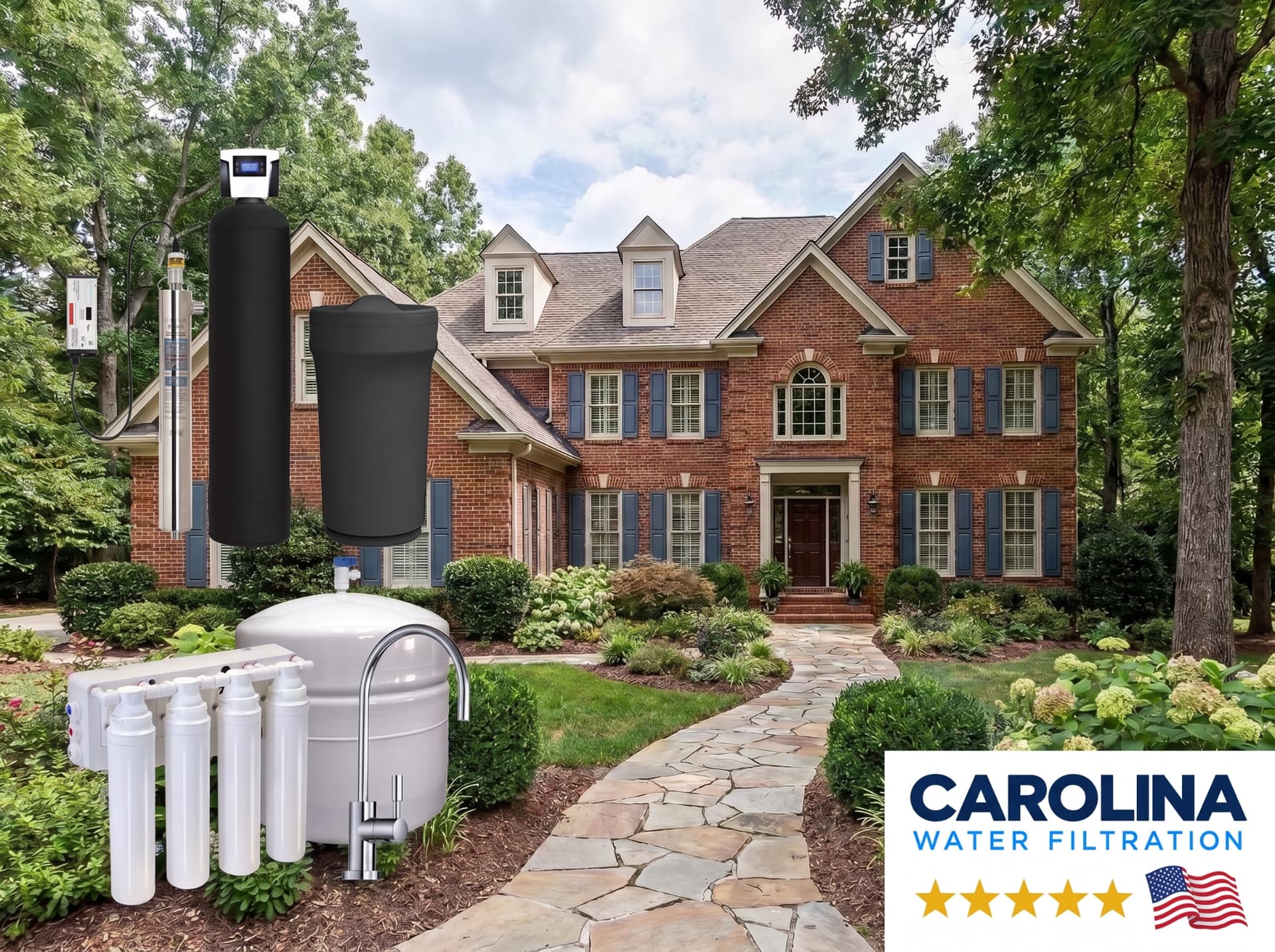
Water treatment services for Charlotte-area homes
Every home is different. These are the systems we install most, and the page for each explains how it works, what it addresses and what upkeep looks like.
Whole House Filtration
Filtered water at every tap and shower, sized to your home's flow.
Chloramine Removal
Catalytic carbon designed for the disinfectant Charlotte Water uses.
Water Softeners
Softener installs and softener + carbon combos when testing shows hardness.
Reverse Osmosis
Under-sink drinking water systems certified to NSF/ANSI 58.
PFAS Filtration
Calm, honest options for homeowners who want an extra layer.
Well Water Treatment
Iron, sulfur smell, sediment and UV disinfection for private wells.
Wondering about budget? Read our whole house water filter cost guide for Charlotte, or see how professional installation and ongoing maintenance work.
How it works
- Step 1
Free water test
We screen your water in your home and listen to what you're noticing.
- Step 2
Custom recommendation
A written plan matched to your results and household — nothing extra.
- Step 3
Professional install
Clean, code-minded installation with a bypass valve and a walkthrough.
- Step 4
Ongoing service
Reminders and help with cartridge, media and membrane changes.
Why filter water in Charlotte?
Charlotte Water draws from Mountain Island Lake and Lake Norman and reports that its tap water meets state and federal requirements. You can read the results yourself in the annual Charlotte Water Drinking Water Quality Report. So why do so many Charlotte homeowners still filter? Usually for comfort, taste and peace of mind rather than fear.
Chloramine, taste and odor
Charlotte Water disinfects with chloramine — a combination of chlorine and ammonia that stays active longer in the pipes. It does its job well, but some people notice a pool-like taste or smell, or dry skin and hair after showering. Standard carbon is slow to remove it, which is why we usually recommend catalytic carbon for chloramine removal. A water softener alone won't remove it.
PFAS awareness
PFAS are in the news, and it's reasonable to ask about them. Charlotte Water's 2022 report says it monitors for more than 70 PFAS and that results show low or non-detect levels. If you'd still like an extra layer, point-of-use reverse osmosis and quality carbon systems are common options — see PFAS water filtration.
Your home's plumbing matters too
Water can pick up sediment or metals between the treatment plant and your glass, especially in older plumbing. For lead or fluoride concerns at the kitchen tap, a point-of-use reverse osmosis system (NSF/ANSI 58) or an NSF/ANSI 53 lead-reduction filter is the usual answer.
On a private well?
Wells aren't covered by a utility report, so testing is the only way to know. Our well water treatment page covers iron, sulfur smell, sediment and UV disinfection.
Water filtration across the Charlotte area
Water filtration questions from Charlotte homeowners
Is Charlotte tap water safe to drink?
Charlotte Water reports that its tap water meets state and federal drinking water requirements, and it publishes the results every year in its Drinking Water Quality Report. Many homeowners still choose to filter for better taste and odor, to reduce chloramine, or simply for extra peace of mind.
What does a whole house water filter remove?
A whole-home system treats water where it enters your house. Depending on the media, it typically reduces chlorine and chloramine, sediment, and taste and odor issues for every tap and shower. See our whole house water filtration page for details.
Will a water softener remove chloramine?
No. Softeners exchange hardness minerals; they don't remove chloramine. A catalytic carbon whole-house filter is the usual approach. Learn more about chloramine removal.
How much does a whole house water filter cost in Charlotte?
A third-party estimate puts a typical installed whole-house filter in Charlotte at roughly $800–$1,600 (contractorplus.app, Aug 2026). That's a typical industry range, not our pricing — your quote depends on your water and home. Read the cost guide.
What happens during the free water test?
We screen your water at the tap, talk through what you're noticing, and explain the results in plain English. If a certified lab test makes more sense for a specific concern, we'll tell you. Book your free water test.
Do you work on well water?
Yes. Private wells across the region can have iron, sulfur odor, sediment or bacteria concerns. Testing comes first, then a treatment plan. See well water treatment.
More answers on our FAQ page.
Find out what's really in your water
A free, no-pressure in-home water test is the first step. We'll explain the results in plain English and recommend only what your home actually needs.